Books and Publishing

Books should be built for a life beyond launch.

Bravura Works is building a publishing program around a simple idea: a book is not finished when the file uploads. It has to survive editing, design, rights, production, distribution, correction, new formats, and the years that come after release.

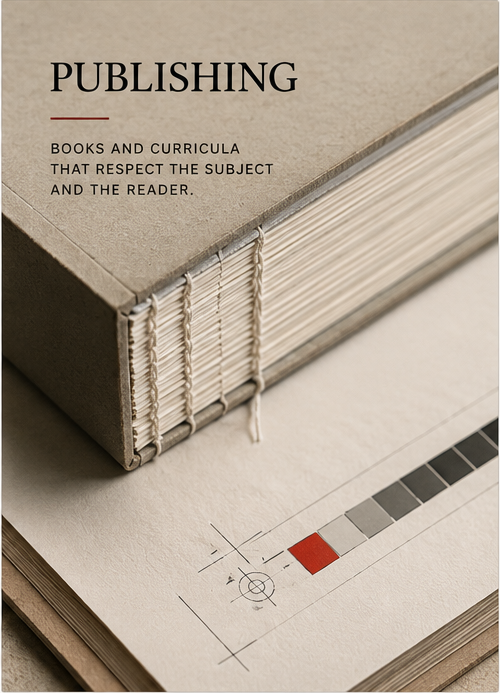
Close view of a carefully bound book and printed production marks, representing editorial craft and publishing infrastructure.

A book has to stay itself as it changes.

Every book has an identity that has to survive editions, formats, metadata, distribution channels, corrections, and revisions. Bravura Works is building the operating discipline to keep those pieces coherent instead of treating publication as a one-time export.

One work. More than one expression.

A work can move through editions and formats without losing its identity. Print, ebook, and future manifestations may behave differently, but the relationship among the work, the edition, and the version in a reader’s hands should remain traceable.

From work to catalog

Work → Edition → Formats

Bravura Works treats a book as a work that can move through distinct editions and formats without losing its identity. Print, ebook, and other manifestations may differ in production and distribution while remaining traceable to the same underlying work and edition.

IdentityWork
VersionEdition
Hardcover
Paperback
EPUB

A work may have distinct editions. Each edition may branch into multiple formats, including hardcover, paperback, and EPUB.

FROM MANUSCRIPT TO CATALOG

Publishing is a chain of decisions, not a file upload.

Editing, design, rights, accessibility, production, metadata, proof, distribution, and later revisions are not separate chores orbiting a manuscript. Together, they determine whether the book remains coherent and trustworthy as it moves from one form, channel, and edition to another.

01

Develop the work

Build the book before packaging it.

What happens

Clarify the book’s purpose, reader promise, source or creative ground, structure, manuscript, navigation, dependencies, and actual reading experience before design and production make weak decisions expensive.

Why it matters

A polished cover cannot rescue a book whose structure, evidence, progression, or reader experience is still unresolved.

02

Shape the edition

Turn the work into a specific, coherent edition.

What happens

Bring editorial decisions, rights, visual hierarchy, typography, imagery, accessibility, cross-references, and proof into one controlled edition.

Why it matters

An edition is a controlled expression of the work. Its design and production choices should reinforce meaning without quietly changing it.

03

Build the formats

Hardcover, paperback, and digital are related products, not interchangeable exports.

What happens

Build each format for the way it will actually be read, with the layout, navigation, accessibility, metadata, identifiers, files, proofing, and channel requirements that format needs.

Why it matters

The same work may need different physical and digital behavior while remaining recognizably the same edition.

04

Steward the catalog

Publication creates an operating responsibility that continues after release.

What happens

Keep metadata, identifiers, rights, availability, distribution, corrections, revised editions, and change history under stewardship after release.

Why it matters

A book should not become an orphaned set of retailer listings and files the moment it launches.

ILLUSTRATIVE EXAMPLE

One manuscript. More than one finished object.

The starting point

Imagine a substantial practical nonfiction manuscript. The ideas are strong and the draft is complete, but the chapter architecture still needs reader testing, several claims require source reconciliation, illustrations have different rights histories, and the book is intended for both print and digital reading.

The publishing work

First, the book itself has to hold up. The structure and reader experience are tested, the claims and rights are reconciled, and the edition is locked around approved text, navigation, visuals, accessibility, and proof criteria. Only then do paperback, hardcover, or digital versions get built for the needs of each format.

What has to survive release

After launch, the publishing job does not disappear. Title and contributor data, edition identity, identifiers, rights, cover and interior versions, availability, and distribution records all have to remain traceable so a correction or revised edition does not blur into the version already in readers’ hands.

That is the difference between producing a book-shaped file and operating a publishing system.

WORK IN DEVELOPMENT

See how the publishing approach shows up on the page.

Four very different subjects. The same publishing standard: substantial work, clear structure, thoughtful form, and enough discipline to survive revision, format, and time.

Cover of Perfectly Delicious, a food science and technique book in development.

Perfectly Delicious

Food science, technique, and appetite on the same page. The sample follows a lemon tart from tender crust through curd method, troubleshooting, and the finished dish.

View sample
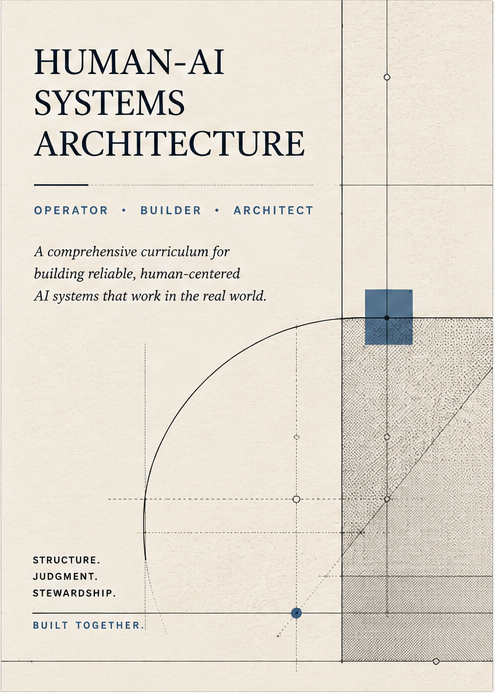
Human–AI Systems Architecture visual showing the relationship between people, systems, and structured learning.

Human–AI Systems Architecture

A systems curriculum for people who need human and AI work to hold together in the real world. The sample pairs a core passage with a learner exercise on source authority.

View sample
Approved cover for Bravura Works’ national parks history project in development.

National Parks history project

National parks history without the souvenir-shop varnish. The opening sample traces how wilderness became a public institution shaped by power, access, preservation, labor, and consequence.

View sample
Security as a System cover concept with nested trust boundaries and controlled flows on an ivory field.

Security as a System

Cybersecurity taught as a system, not a vocabulary test. The sample starts with boundaries and hidden trust so readers can reason about where controls actually need to live.

View sample

Submissions are currently closed.

Bravura Works is not currently accepting unsolicited manuscript submissions.

CURRENT PUBLISHED WORK

The publishing program is still in development. In the meantime, Systems That Work is Bravura Works’ current published body of work.

Read Systems That Work